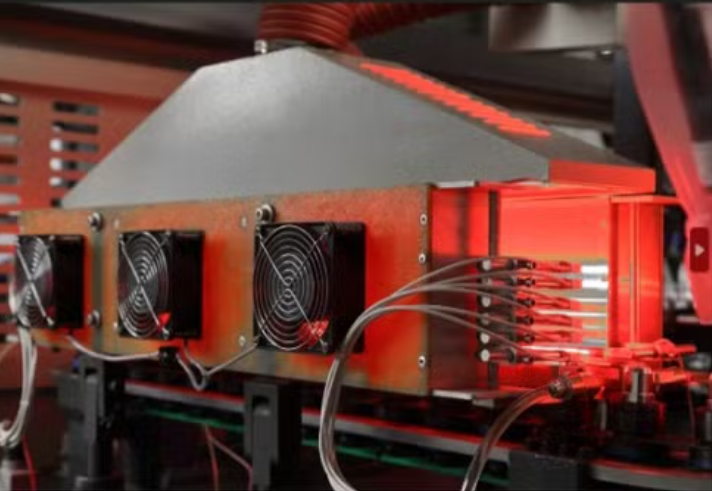
When the SIPA stretch blow molder is humming along, the heating tunnel is easy to ignore—until it isn’t. One lamp starts cycling on and off. Another throws uneven heat. Preforms come out with soft spots, and the blow station starts rejecting bottles. You don’t need a new machine. You need a lamp that behaves like the original: same output, same fit, and the same stability when you’re running 24/7. We build replacement infrared lamps specifically for SIPA blow molding machines because the heating section isn’t just a heat source—it’s a repeatable thermal process. Drop in the wrong lamp and the temperature profile shifts. You feel it as quality loss, scrap, and unplanned downtime.
What matters, technically
A replacement lamp for a SIPA blow molder has to clear more than just wattage. It needs to match the machine’s heating geometry, electrical interface, and how it responds to the controls. Our lamps are engineered as direct-fit infrared emitters for SIPA heating tunnels. The specs are chosen to keep the existing thermal balance intact:
- **Heating technology:**Short-wave infrared halogen emitter. Fast start-up and quick response to setpoint changes—exactly what the SIPA heating control expects when it modulates zone temperatures.
- **Power density:**Rated to match the OEM heating zone design. Too cool, and preforms underheat and stretch unevenly. Too hot, and you get crystallization, haze, and a shorter lamp life.
- **Voltage and current:**Specified to work with the machine’s transformer and control circuitry. Mismatched voltage leads to erratic control, premature failure, and nuisance alarms.
- **Physical interface:**Correct base type and overall length so the lamp seats cleanly in the reflector assembly. Proper alignment keeps the hot zone where it belongs—on the preform wall.
- **Spectral output:**Optimized to couple with PET absorption. The point is efficient heating through the preform wall, not surface-only heating that creates hot spots.
- **Thermal stability:**Filament and quartz construction that holds output steady over long runs. In practice, fewer swings while the heating tunnel holds temperature. We measure performance the way the machine does—by stability, repeatability, and how fast the system recovers after a door opening, a brief stop, or a change in line speed.
Why this works on a SIPA line
On a SIPA line, the heating tunnel is the bottleneck you can’t fix with more air pressure or faster timing. If lamp output drifts, the temperature profile drifts. First you see rejects. Then you see operators tweaking offsets. Next thing you know, you’re running the line by feel instead of by spec. A lamp built to the SIPA-matched spec keeps the heating zone consistent:
- **Fast recovery after interruptions.**When the line pauses briefly, the lamp restarts quickly and the zone returns to setpoint without a long warm-up lag.
- **Even heating across preforms.**The lamp’s output distribution works with the reflector to deliver uniform wall heating, which cuts down thickness variation after blowing.
- **Predictable lamp life.**We design for long duty cycles with controlled filament stress. In real terms, fewer emergency changeouts during peak production.
- **Energy use that stays in line.**A correctly matched lamp doesn’t overdraw the zone. It heats on demand and holds setpoint without running wide open.
- **Less scrap, less rework.**With a stable heat profile, the blow molder runs with fewer parameter swings, fewer restarts, and fewer off-spec bottles. This isn’t about chasing one big improvement. It’s about stopping the small, repeated losses that show up every shift—micro-stops, re-heats, and the time spent swapping lamps.
What to keep in mind on the floor
A replacement lamp only performs if it’s installed and used right. Here are the practical details that matter.
- **Confirm the exact lamp code.**SIPA machines can use different lamp lengths and base configurations across models and tunnel layouts. Match the OEM reference before you order.
- **Check the connector and wiring.**Many lamps use an R7s-style interface. If your machine has a different connector, plan the adapter or harness ahead of time. Poor contact causes flicker, uneven heating, and early failure.
- **Handle with clean, dry gloves.**Oils from skin create hot spots on the quartz, which can shorten life and cause uneven output.
- **Verify the zone control settings.**If the new lamp is spec’d correctly, you shouldn’t need to change PID values. Still, it’s smart to confirm setpoint stability after the first changeout.
- **Expect a warm-up period.**Infrared lamps reach operating temperature quickly, but the heating tunnel stabilizes over a longer run. Let the zone settle before you judge performance.
- **Plan for thermal stress.**If you’re replacing the lamp while the tunnel is hot, allow a short cool-down or a controlled replacement window. Abrupt thermal shock can crack the quartz. If you’re running a SIPA blow molder, the heating tunnel is where the process starts. A replacement lamp that matches the machine’s spec keeps the line stable, the quality consistent, and the maintenance plan on schedule. Tell us the SIPA model and the lamp reference you’re using now. We’ll supply the correct infrared emitter, built to the right electrical and mechanical spec, so the heating section does its job—quietly, repeatedly, and without becoming the reason the line stops.