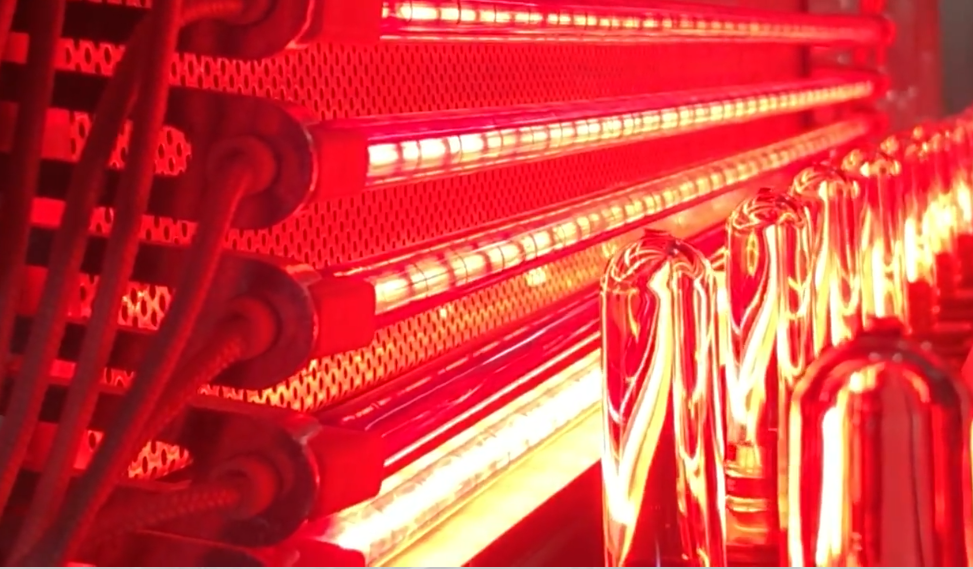
On the blow molding line, a tired oven heater doesn’t just burn extra electricity. It throws off preform heating, and suddenly you’re chasing rejects and trimming cycle time just to keep things stable. When the heating tunnel starts to slip, the whole stretch blow molding process follows.
What matters under the hood
We build replacement infrared heaters to drop straight into existing blow molding ovens, using short-wave quartz emitters matched to the original OEM power profile. Typical units run 1200–2400 W, 230 V, with R7s connectors and standard mounting lengths, so the swap is plug-and-play—no bracket mods, no rewiring. Fast warm-up and tight thermal control keep preform surface temperature inside the narrow band that makes stretch and blow predictable.
Why it plays in a PET bottle plant
In your PET bottle shop, the right replacement brings the heating curve back to what the blow molder expects. That means fewer thin walls, less crystallization, and steadier output. Energy use drops because the emitter delivers heat when it’s needed, with minimal standby loss. And you’ll typically get longer service life compared with older halogen assemblies—fewer maintenance stops, fewer spares tied up in inventory.
The details that bite you
Installation is straightforward, but don’t overlook the oven reflector condition and airflow. If reflectors are oxidized or airflow is blocked, you’ll still get poor output and uneven heating—even with a brand-new heater. Before ordering, confirm your machine’s voltage and connector type. Mismatched terminals or undersized cabling can cause poor contact and uneven heating. Measure the existing heater length and wattage, then match them exactly. That’s how you get the swap done without drama and keep the line running the way it should.