The Secret to a Perfect Crust (Without Burning the Middle)
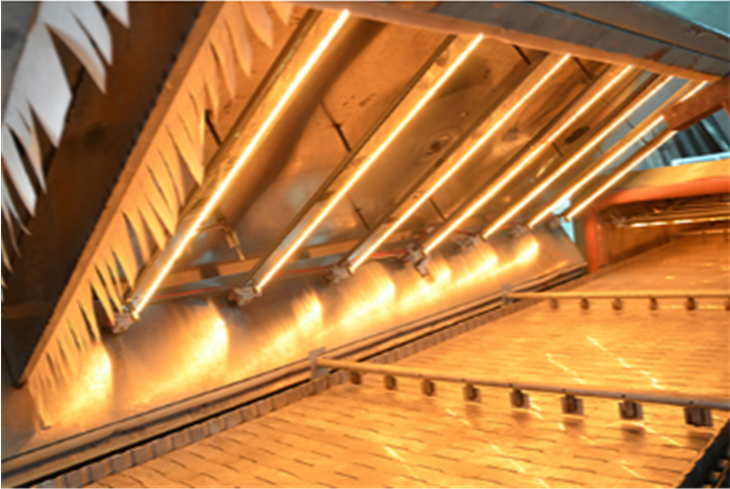
Ever tried to get that perfect, caramelized crust on a loaf of bread, only to find the inside is still doughy? Or worse, you’ve burnt the outside to a crisp just to get the center cooked through? It happens because ambient heat is lazy. It hits the surface and stops. That’s why we use short-wave infrared (SWIR). Instead of heating up the air and hoping for the best, infrared sends energy straight into the dough molecules. It’s a direct hit. Why the physics actually matter Most ovens just rely on conduction—basically, heating the air around the food. But our infrared elements work in a specific wavelength (0.75 to 1.4 $\mu$m) that lets the heat skip past the surface layer. It dives deeper into the bread. This means you aren’t fighting a losing battle with the clock. You get a steady, even heat from the core all the way to the crust. No more guesswork. The gear under the hood We don’t cut corners on the hardware. We house these elements in high-purity quartz tubes because they can handle the stress of being turned on and off rapidly without cracking. Inside, there’s a tungsten filament mixed with halogen gas. The gas actually recirculates the tungsten, which keeps the lamp from burning out the second you crank up the power. It lets us push the wattage higher while keeping the hardware alive longer. Depending on how big your oven is, we’ll spec these for different voltages. If you need to move a lot of product quickly, you’ll want a high-wattage tube for that intense heat density. Just a heads-up: these things gethot. Like, really hot. Make sure your housing is rated for the temperature, otherwise, you’re going to see your chassis start to warp. Fitting them in and keeping them running We use R7s or SK15 connectors. Why? Because they’re simple. If a lamp goes out, your maintenance person can just pop it out and drop a new one in. It takes minutes. No drama. But here’s the thing: short-wave IR is powerful. It’s aggressive. If your conveyor belt is moving too slowly, or if your sensors are acting up, you’ll scorch your bread in a heartbeat. It’s all about the balance between your wattage and your timing. Get that right, and you’ve got the perfect loaf every single time.